| 13cm L/35 Kanone 09 Cartridge Casing | ||
| ||
 | ||
| A close-up of the head stamping on the base. Marked: PATRONENFABRIK (cartridge factory) KARLSRUHE manufactured " AUG 1918" with the standard twin flaming bombs for this manufacturer. "31" is the lot number of that batch of cases which were made during 1918. Sp255 is the control/inspection mark of the manufacturer Patronenfabrik Karlsruhe. Note that the primer has been struck, so this casing was fired. | ||
| ||
| ||
| 13cm L/35 Kanone 09 | ||
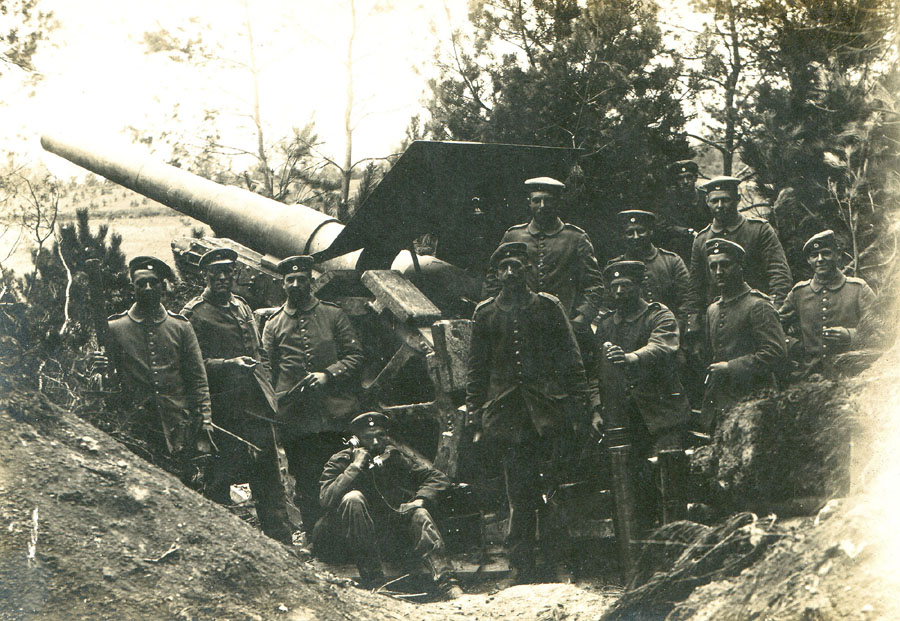 | ||
| A photo of a 13cm L/35 K 09 with the crew. During the course of the war, the wheels of the 13cm K 09 were altered for muddy conditions by affixing Rad-guertel (wheel pads) to the circumference to dissipate the ground pressure. Note that for the sake of the photo, the boys have placed a 13cm projectile in a cartridge casing. 13cm L/35 Kanone 09 Data:
| ||
 | ||
| A superb photo of a 13cm K 09 being loaded with this cartridge casing. Typical for all cannons over 10cm, it utilized separate ammunition where after the projectile was rammed home, a brass cartridge casing containing a set amount of propellant and the primer was inserted. The Gunner in the photo is loading the final piece: the cartridge casing. Note the "run-back ramps" behind the wheels which allowed the cannon to run-back on recoil and then roll back into position. | ||
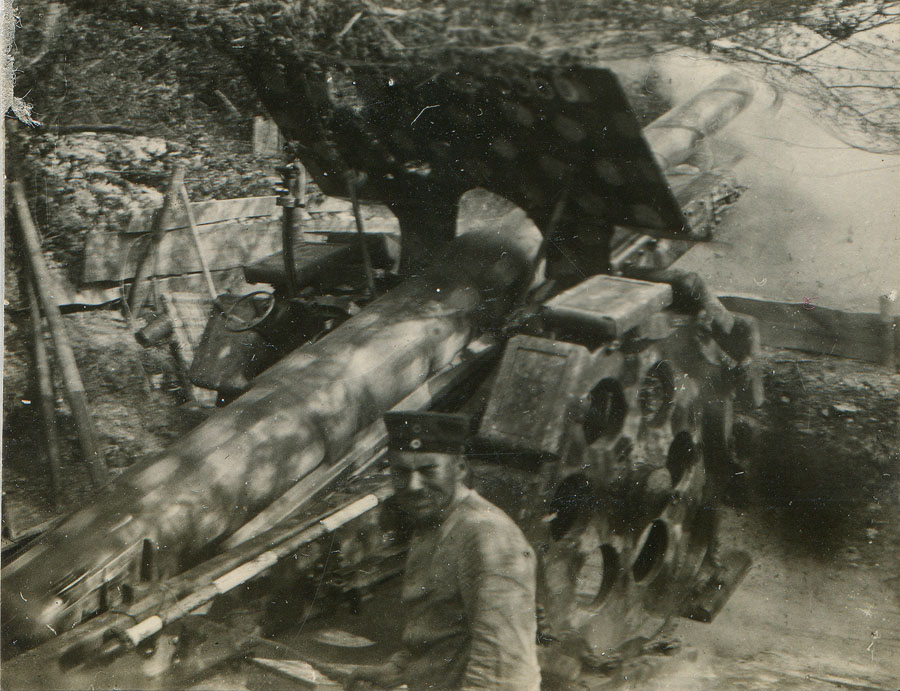 | ||
| 1917 In 1917 the 13 cm Kanone L/35 M09 received steel wheels which had large round holes to reduce weight. This remarkable photograph of the 1917 model shows the barrel and breech in full recoil at the moment of firing. The look on the gunner's face (who must already be deaf) attests to the power of the back blast. This photograph is also an excellent study of the late war splotch camouflage. Note that the wheels are just beginning their run-back onto the ramps as a result of the recoil. | ||
 |


