| 21cm SK L/45 Cartridge Casing |
21cm cartridge casing for the Krupp SK L/45 Kanone (SK: Schnelladekanone = quick loading cannon).
The 21cm SK L/45 were Krupp naval cannons that armed the Kaiserliche-Marine (Imperial German Navy) armoured cruiser SMS Blücher (His Majesty's Ship Blücher).
After the loss of Blücher on 24 January 1915 at the Battle of Dogger Bank, her four reserve 21 cm SK L/45 cannons were released to the Army resulting in the 21 cm SK L/45 Peter Adalbert Eisenbahngeschütze (Railway Gun).
To illustrate the size, the casing is photographed with an original Kaiserliche Marine Deckoffizier Schirmmutze.
21cm SK L/45 Cartridge Casing Data:
- Height - 837mm (32.95 inches)
- Actual Calibre - 217mm (8.54 inches)
- Base Diameter - 242mm (9.52 inches)
- Weight - 15.8 kg (34.83 lbs.)
- Manufacturer - Patronenfabrik Karlsruhe
- Date - January 1911
|
 |
|
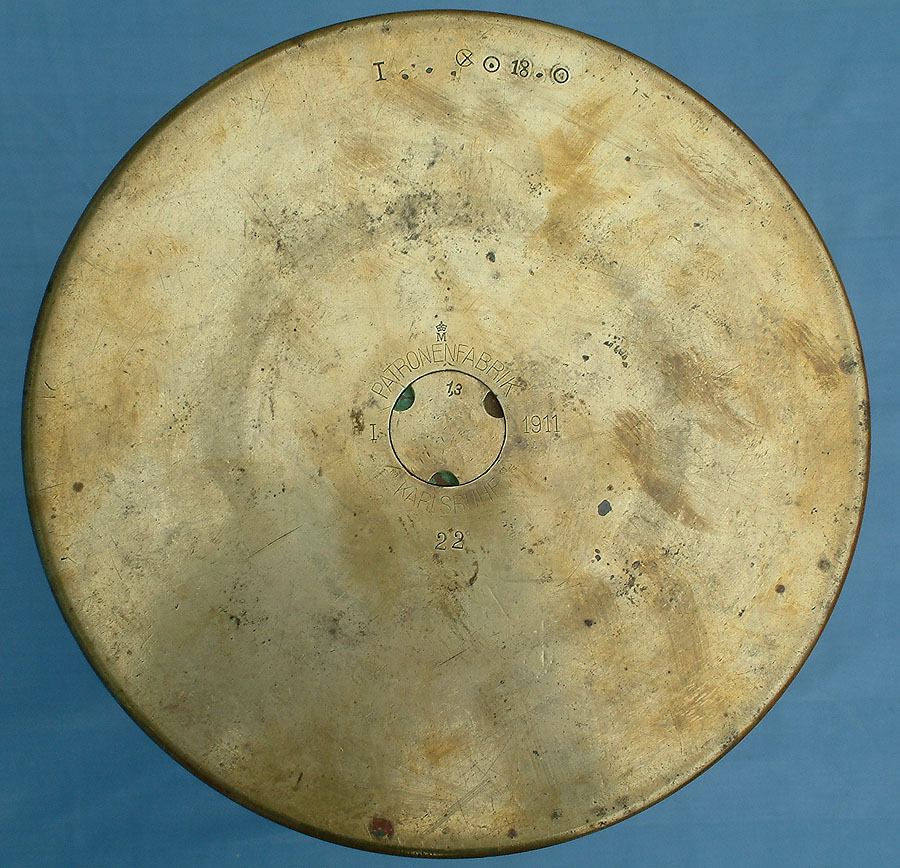 |
| A close-up of the head stamping on the base. Marked: PATRONENFABRIK (cartridge factory) KARLSRUHE manufactured " I 1911" with the standard twin flaming bombs for this manufacturer. Marine cartridge casings used Roman numerals for the month, while the Army used an abbreviation of the month. The "I" in this case stands for January. "22" is the lot number of that batch of cases which were made during 1911. The years and dots on the top are the reload dates. |
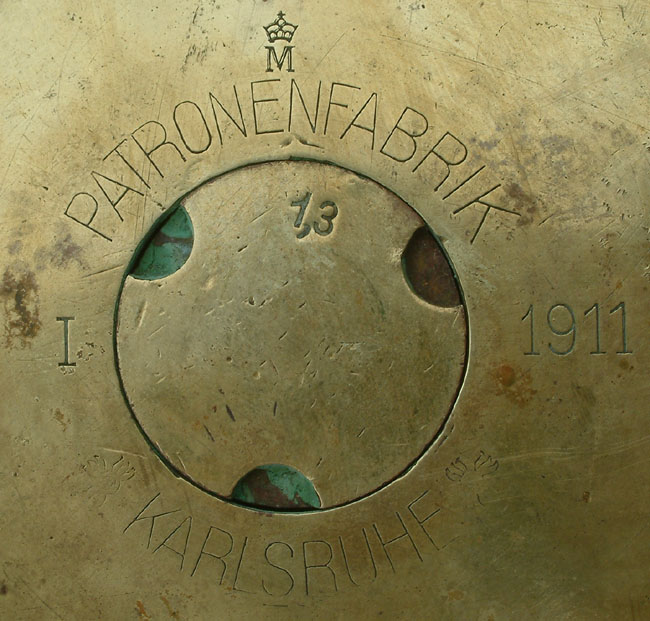 | A close up of the manufacturer's stamp and date, as well as the perfect, crisp crowned M = Kaiserliche Marine (Imperial German Navy) arsenal's acceptance stamp.
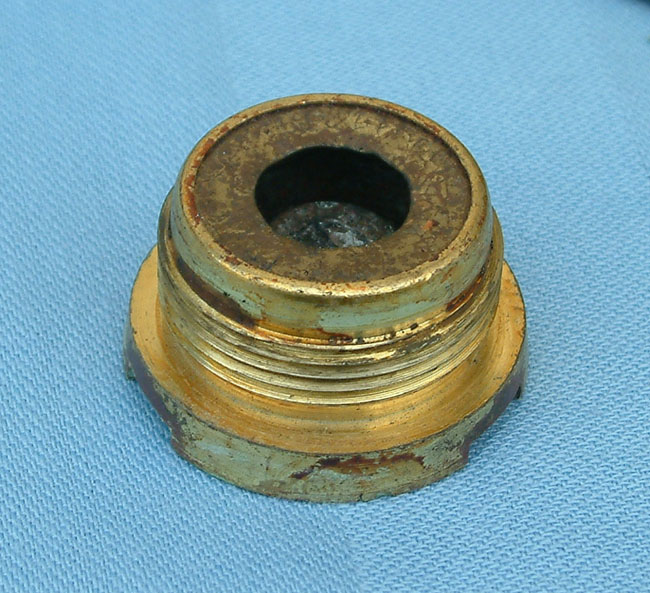
Note that the primer has not been struck, indicating that this cartridge casing was obtained after being reloaded, before it was fired again.
| |
| A close up of the primer which has not been fired.
|  | |
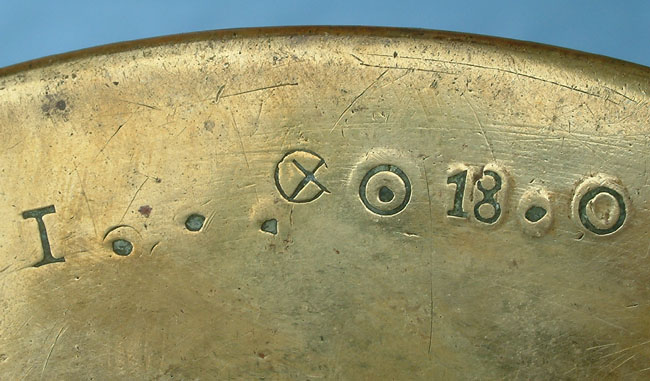 | A close up of the reload dates; the "18." indicates the casing was reloaded once in 1918 and used by the Fußartillerie (Foot Artillery) on the Western Front on a Peter Adalbert Eisenbahngeschütze (Railway Gun). Dots are the number of times in that year.
| |
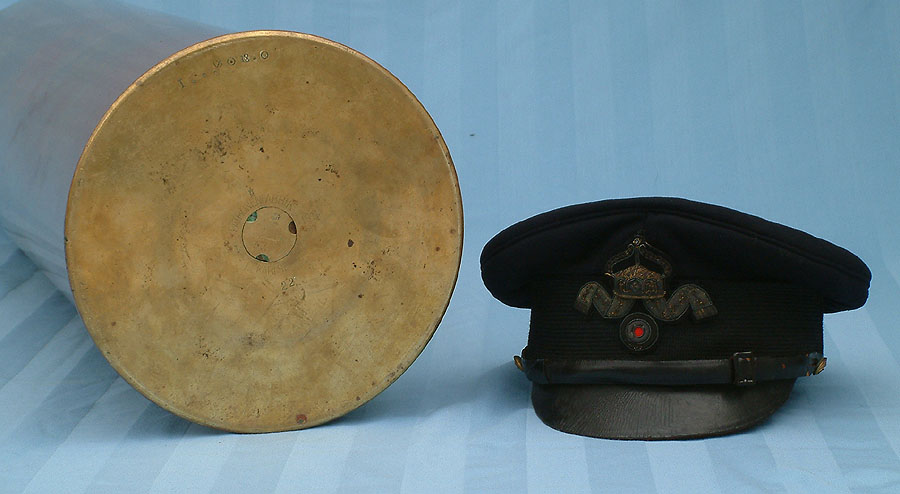 |
| The 242mm (9.52 inches) base of this 1cm SK L/45 cartridge casing shown with an original period superb original Kaiserliche Marine Deckoffizier Schirmmutze with beautifully toned hand-embroidered Deckoffizier insignia and a leather visor to illustrate the size. |
| |
| |
| SMS Blücher |
 |
SMS Blücher (His Majesty's Ship Blücher) was the last armoured cruiser to be built by the Imperial German Navy (Kaiserliche Marine) before the change by the British and German navies to heavy battlecruisers. Blücher was larger than preceding armoured cruisers and carried the larger calibre 21cm SK L/45, but was unable to match the size and armament of the modern battlecruisers which followed her. The ship was named for the Prussian Field Marshal Gebhard von Blücher, the commander of Prussian forces who fought for the British at the Battle of Waterloo in 1815.
SMS Blücher was built at the Kaiserliche Werft shipyard in Kiel and commissioned on 1 October 1909. She participated in the bombardment of Yarmouth and the raids on Scarborough, Hartlepool and Whitby in 1914, finally meeting her end at the Battle of Dogger Bank. |
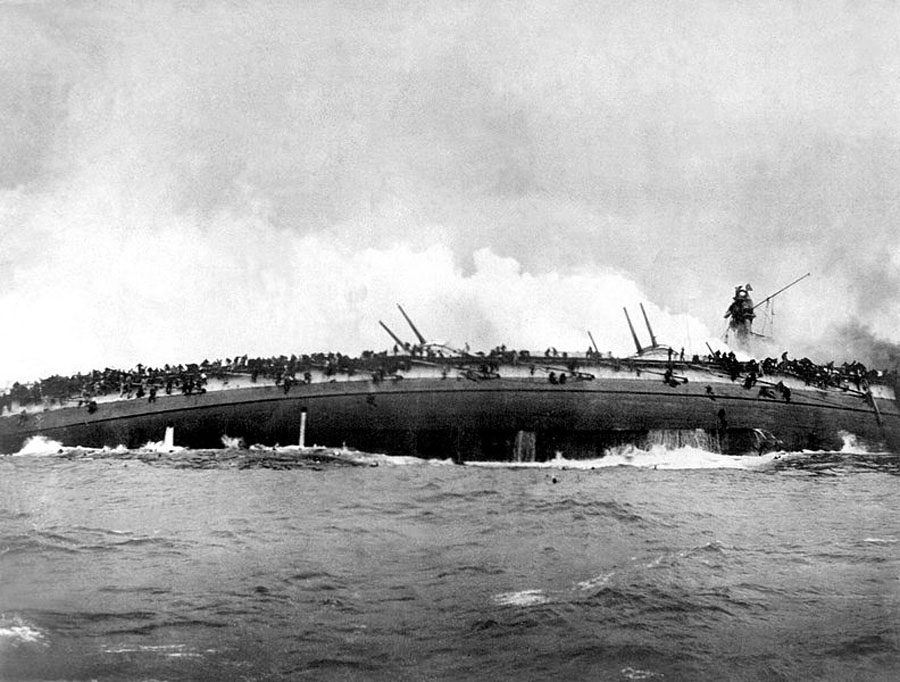 |
On 24 January 1915 at the Battle of Dogger Bank, SMS Blücher was hit repeatedly by rounds fired from British battle cruisers, which caused her to lose speed and fall behind the remainder of her Squadron. The commander of the German squadron Rear Admiral Franz von Hipper had no choice but to leave Blücher behind as his more valuable battle cruisers withdrew. Blücher then came under intense British fire but continued to fight stubbornly even though she had been struck by an estimated 70-100 13.5-inch Mk V shells from the British battlecruisers. She finally succumbed to hits from no less than nine torpedoes causing her to roll over and capsize becoming one of the iconic photographs of the Great War. The amount of punishment SMS Blücher received before finally sinking stunned the British Admiralty at the time. The number of casualties according to German records was 792 lost.
21cm SK L/45 Cannon Data:
- Weight - 5.73 metric tons (12,632 lbs)
- Range - 19.10 km (11.86 miles)
- Manufacturer - Krupp
- Barrel Length - 9.45 meters (31 feet)
- Projectile - 108 kg (238 lbs) Armour Piercing High Explosive
|
| |
| 21cm SK L/45 Peter Adalbert Eisenbahngeschütze (Railway Gun) |
 |
| After the loss of Blücher on 24 January 1915 at the Battle of Dogger Bank, her four reserve 21 cm SK L/45 cannons were released to the Army as no other ships in the Kaiserliche-Marine used this calibre. Krupp was ordered to design a Bettungsschiessgerüst (firing platform) in May 1915 resulting in the 21 cm SK L/45 Peter Adalbert Eisenbahngeschütze (Railway Gun). The 21 cm SK L/45 Peter Adalbert rotated on a large plate at the front of the carriage, allowing the rear to traverse on wheels resting on a semicircular rail. One distinctive feature of the 21 cm SK L/45 Peter Adalbert was the armoured plate surrounding the crew working area and the small shield mounted forward of the trunion; a feature not found on other Eisenbahngeschütze (Railway Gun).
|
| |
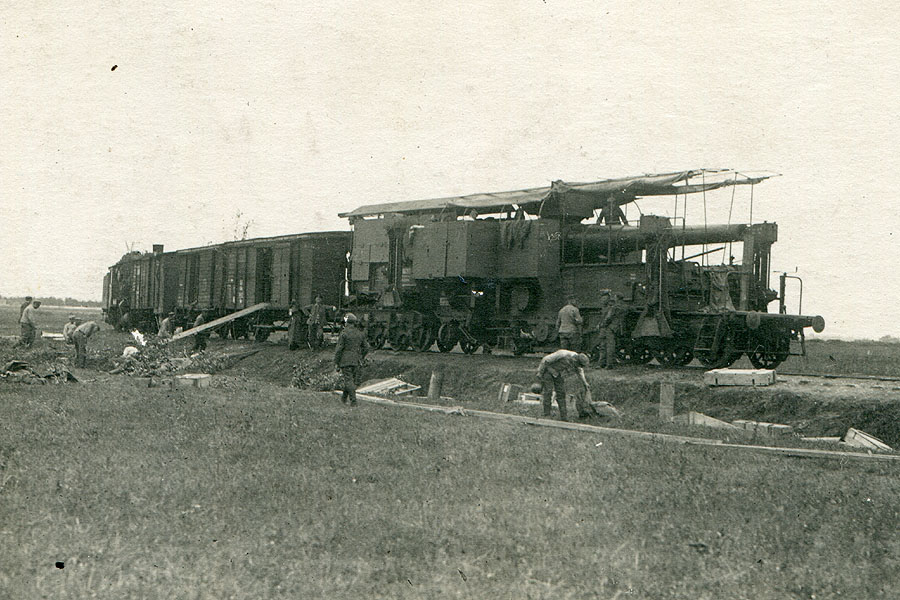 |
The Artillerie Prüfungs-Kommission (APK - Artillery Testing Commission) was dissatisfied with the lengthy time required to emplace the cannons on the Bettungsschiessgerüst (firing platform) and decided in 1918 to transfer the guns to the Eisenbahn und Bettungsschiessgerüst (E. u. B.) (railroad and firing platform) mounts successfully used by other Eisenbahngeschütze. The E. u. B. could fire from any suitable section of track after curved wedges were bolted to the track behind each wheel to absorb any residual recoil after the gun cradle recoiled backwards. The bottom plate and rear rollers under the carriage remained, but now large hydraulic jacks were added to all four corners to lift the carriage off of the railway trucks for mounting.
After the Bettungslafette (portable metal firing platform) was assembled, the carriage was moved over the firing platform. Then the entire carriage was jacked up with the hydraulic jacks allowing the railroad trucks to be be removed. The carriage was then lowered allowing the plate under the carriage to be bolted to the firing platform's pivot mount and the rear rollers to rest on the outer curved track allowing traverse in azimuth.
|
| |
|
 |