| 30,5cm Küstenmörser Beta 97/09 & Schwere Kartaune Beta-M-Gerät Cartridge Casing | |||
 | |||
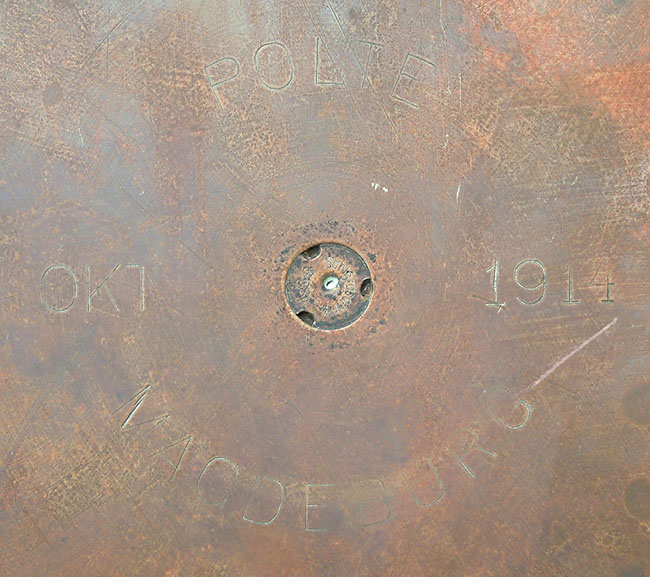
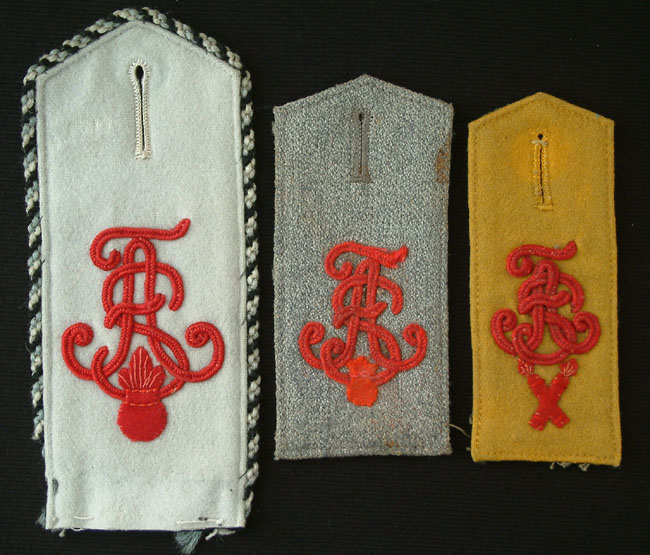
| 30,5cm cartridge casing for the Krupp Küstenmörser 97/09 Gerät (Coastal Mortar Model 1897/1909) & the 1918 Schwere Kartaune Beta-M-Gerät . To illustrate the size, the casing is photographed with an original Model 1894 2. Garde-Fußartillerie -Regt. (Foot Artillery) Mannschaften issued Pickelhaube which would have been worn by the troops firing this weapon. 30,5cm Cartridge Casing Data:
|
|||
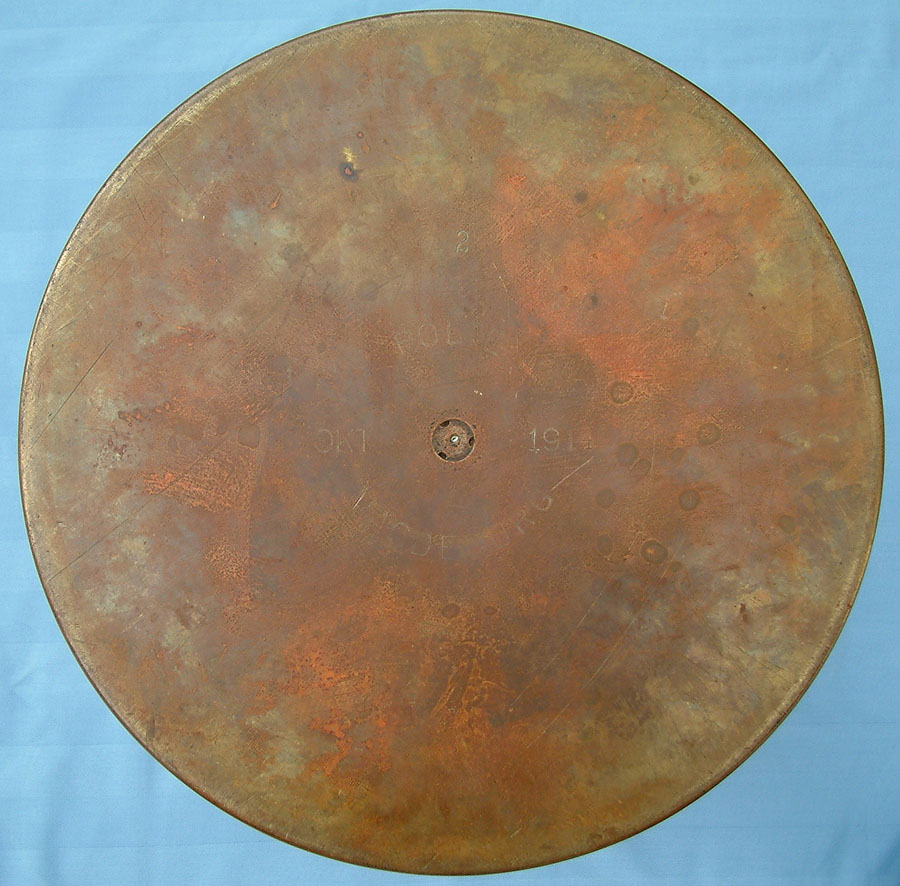 | |||
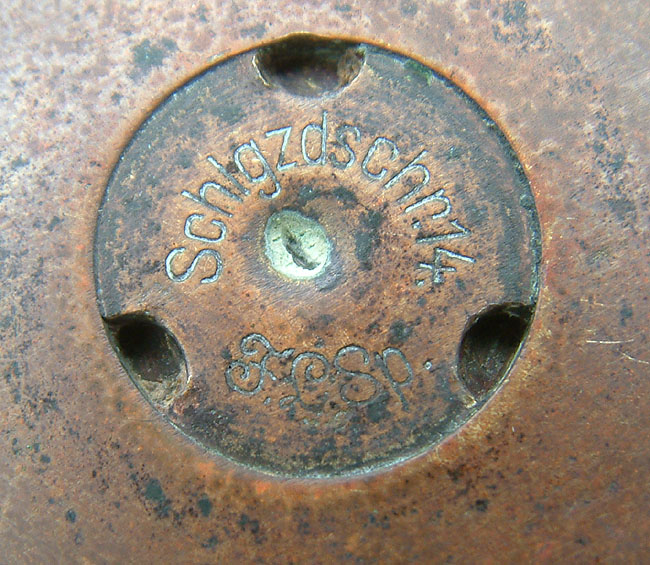
| A close-up of the head stamping on the base. | |||
| |||
| |||
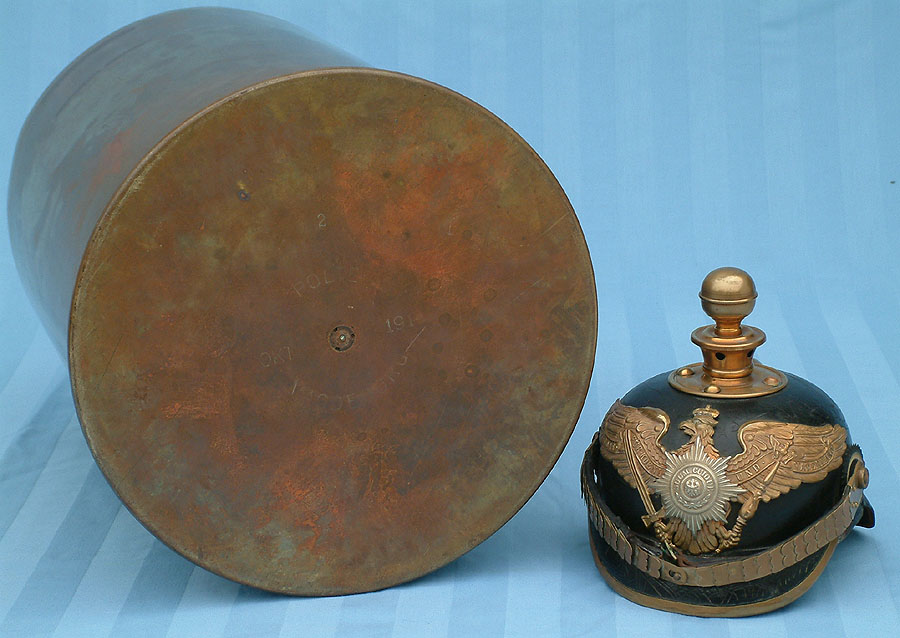 | |||
| The 341mm (13.42") base of this 30,5cm cartridge casing shown with an original period model 1894 2. Garde-Fußartillerie -Regt. (Foot Artillery) Mannschaften issued Pickelhaube. The 30,5cm M97/ 09 Beta Gerät and the 1918 Schwere Kartaune Beta-M-Gerät were manned by gunners of the the 2. Garde-Fußartillerie-Regiment. | |||
| |||
| 30,5cm Krupp Schwere Küstenmörser (Heavy Coastal Mortar) | |||
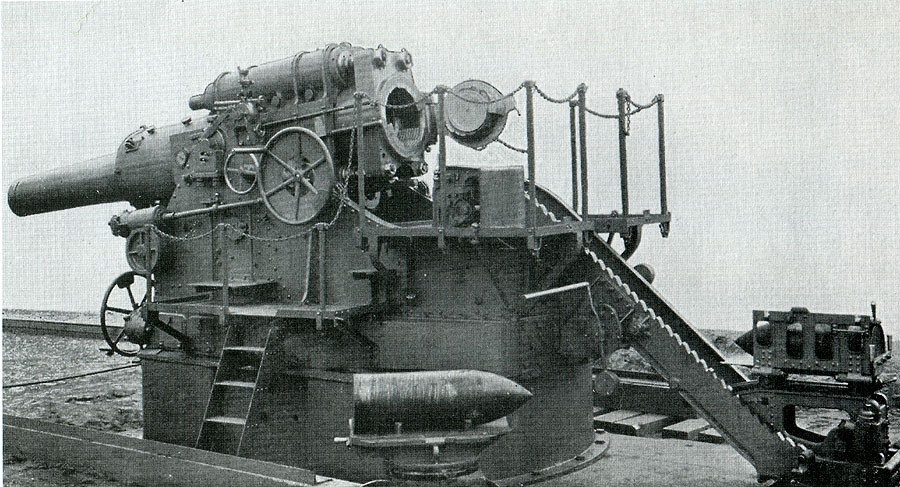 | |||
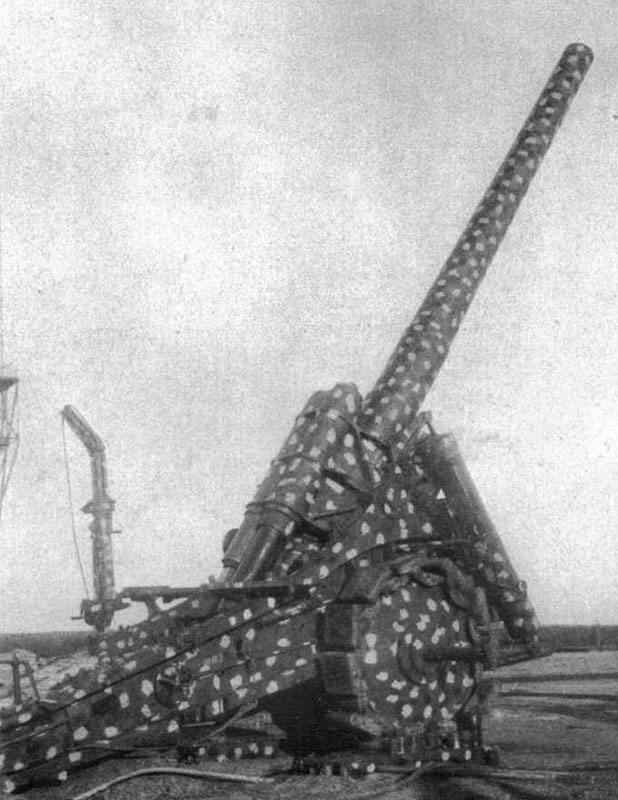
| Under the ruse of being Küstenmörser (Heavy Coastal Mortar), Krupp under the direction of the German General Staff developed a heavy 30,5cm siege mortar to be used against permanent fortifications in Belgium and France. Whereas previous munitions for coastal mortars had been developed by the Kaiserliche-Marine (Imperial German Navy), the munitions for the 30,5cm Küstenmörser were developed by the Army Artillerieprüfungskommission (Artillery test Commission). This explains why cartridge casings for a weapon designated as a Küstenmörser (Heavy Coastal Mortar), do not have the crown M stamping for the Kaiserliche-Marine. The first to be developed was the M97 Beta Gerät Küstenmörser built between 1899 and 1906 of which nine were built. Six M97 Küstenmörser were fielded in the spring of 1899, followed by another three in 1904. However only two of the following model, the 30,5cm Beta 09 Gerät (shown above) were built before the German General Staff ordered a larger calibre howitzer - the 42cm Gamma Gerät Howitzer. This exact 30,5cm cartridge casing can clearly be seen sitting on the deck of the 30,5cm Beta 09 Gerät above. Of interest, Krupp, who religiously utilized a sliding-wedge breech block, utilized for the first time on the Beta 09 Gerät an interrupted screw breech (clearly seen in the above photo) which was common for large calibre weapons used by most world powers. Although an interrupted screw breech does not require a cartridge casing and functions perfectly well with bagged charges, Krupp continued to use a brass cartridge casing as it reduced corrosion on the breech interior. 30,5cm Krupp Beta 09 Gerät Data:
There were five Schw. Küst. Bt. (Schwere Küstenmörser Batterie = Heavy Coastal Mortar Battery ) known to have been deployed in 1914: Schw. Küst. Bt. 1 to 4 employed the nine M97 Beta Gerät and the two Beta 09 Gerät were assigned to Schw. Küst. Bt. 5 commanded by Hauptmann Scharf and attached to the Second Army.
| |||
| 30,5cm Krupp Schwere Kartaune Beta-M-Gerät | |||
| |||
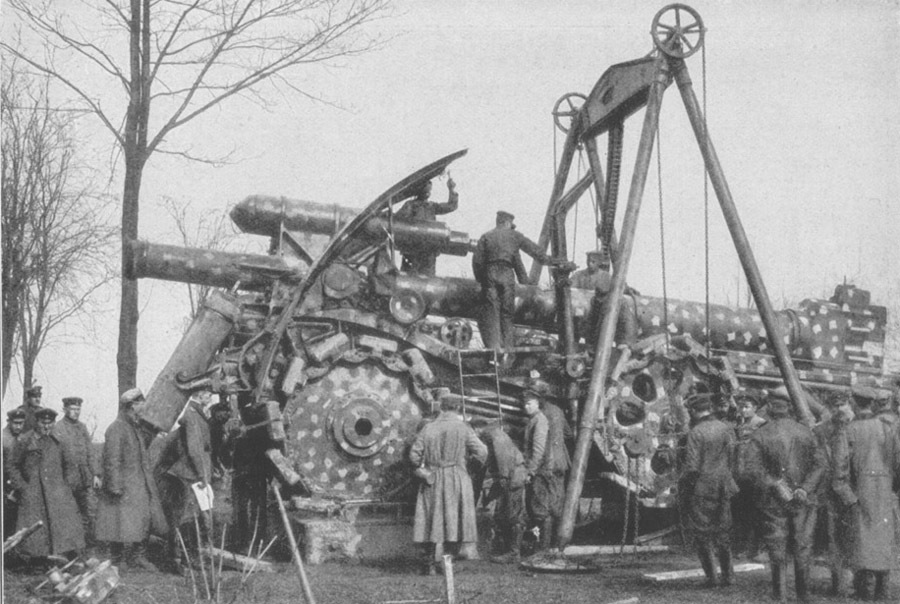 | |||
Like its predecessor the 42cm M-Gerät Dicke Bertha, the immense weight of the 30,5cm Schwere Kartaune Beta-M-Gerät required that it be moved broken down into components and hauled by tractors to the staging area where it would be assembled. In this photograph the incredibly long barrel and breech assembly is being fitted into the cradle which has already been secured to the carriage.
| |  |