| Braunschweigisches Infanterie-Regt. Nr.92 Polrock |
| |
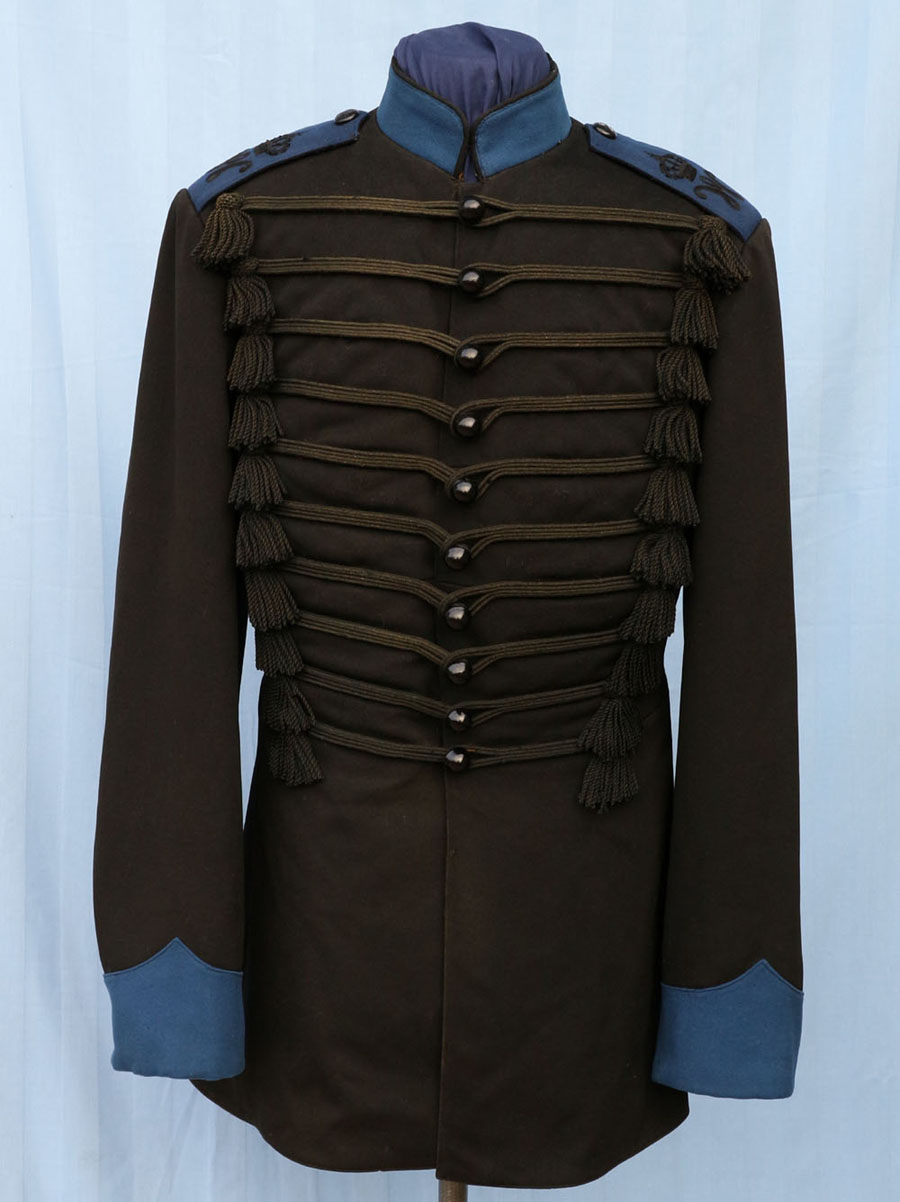 |
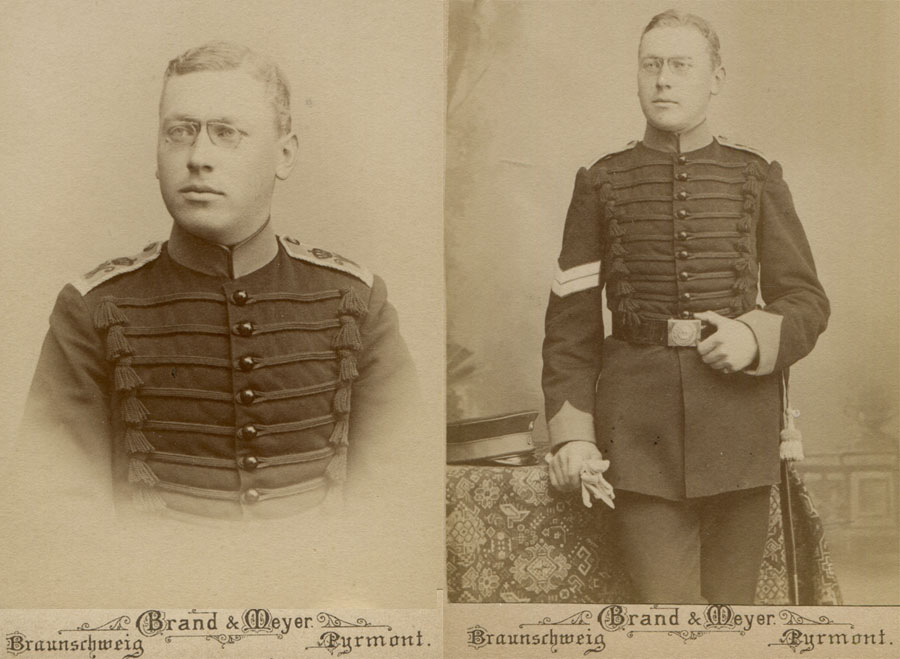
| Mannschaften (Other Ranks) Eigentumsstück (private purchase) black Polrock from Braunschweigisches Infanterie-Regt. Nr.92 (Braunschweig) X Armee Korps. The black Polrock was 1st worn by troops of the Herzogtum Braunschweig (Duchy of Braunschweig) in 1809 during the Napoleonic Wars. The "Black Hoard" from Braunschweig achieved numerous victories in their black Polrocks, cheering "Death or Glory!" when as allies of the British, they attacked and drove back the French invaders. The Polrock was influenced by the British Army uniforms of the time, as King George I of England was concurrently Duke and Prince-Elector of Brunswick-Lüneburg (Hannover). The Polrock remained more or less unchanged until 1867 when the cypher of the Duke Friedrich Wilhelm, who was killed in the Battle of Quatre Bras on 16 June 1815 , was added to the shoulder straps. From 1815 on, the Braunschweigers wore a metal Totenkopf on their Tschakos to honour their fallen Duke. Thus began the Braunschweig Totenkopf. This pattern of Polrock was worn from 1867 to 1886 when it was replaced with the Preußen Dunkelblau Waffenrock, although it was probably worn for some time during the transition. It was believed to have last been worn by the Braunschweig palace guard on 02 May 1892. Surviving examples are very rare. |
| |
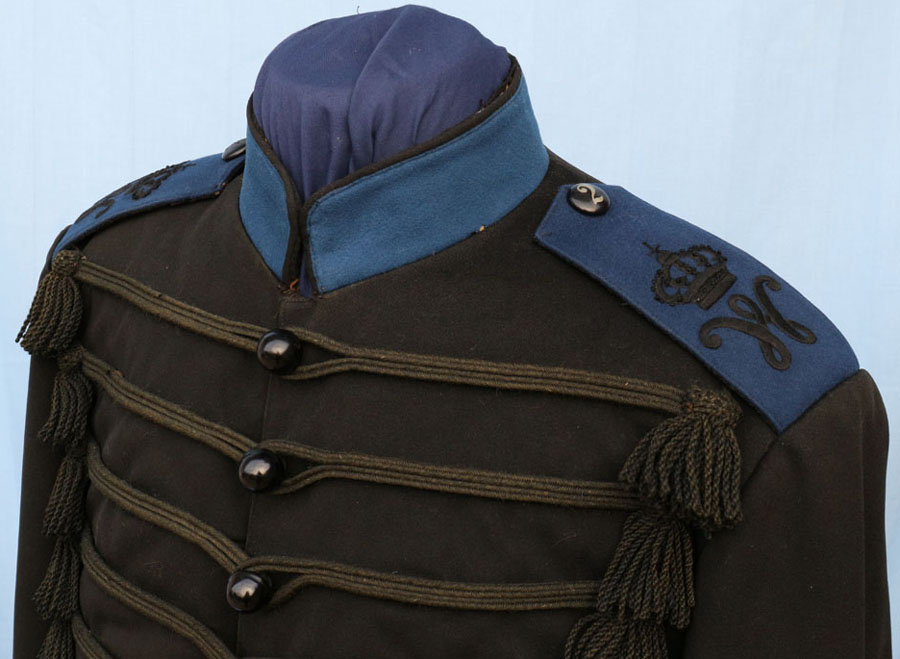 |
| The Polrock is highly distinctive not only because it is black wool with cornflower blue cuffs, shoulder straps and black-piped collar, but the cuffs are Polish (like Ulanen) and the front is braided (like Husaren). However, the oddest feature are the wool tassels at each end of the chest braid. The braiding and tassels at one time would have been jet black, but they have faded with age. All buttons are glass (yes glass) except the shoulder buttons which are painted zinc. The lack of NCO sleeve chevrons identify the original owner as having been a Füsilier (Private). The rank insignia on the Polrock for NCO's was also unique in the Imperial Army, in that it was British.So in the British Army pattern, NCOs carried silver chevrons on the right sleeve : two for Unteroffizier, three for Sergeant, and four for Feldwebel. |
| |
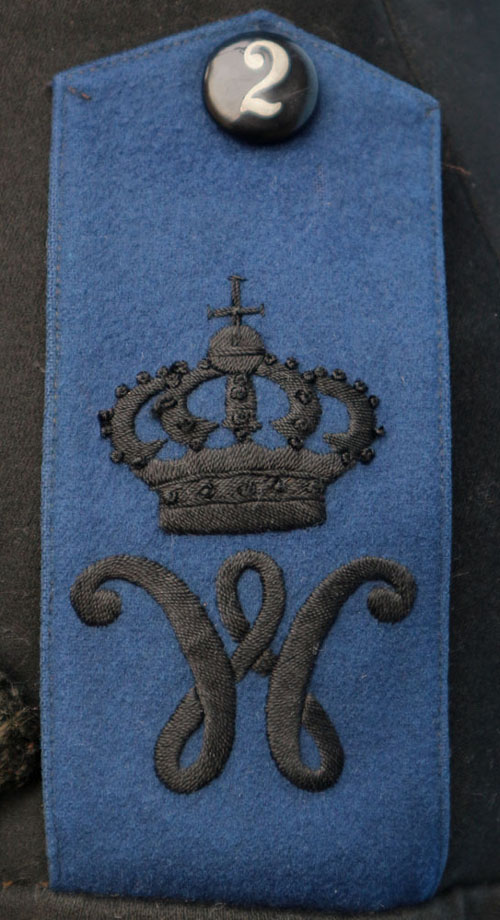 | The shoulder straps are superbly hand-embroidered with a massive crowned W of Duke Friedrich Wilhelm. The W cypher for William VIII was adopted in 1867 on the Polrock. It did not change for Prince Albert of Prussia, John Albert of Mecklenburg, or Ernest Augustus III.
One of the zink painted company buttons has lost the silver on the "2", but the one shown here is perfect. | |
| |
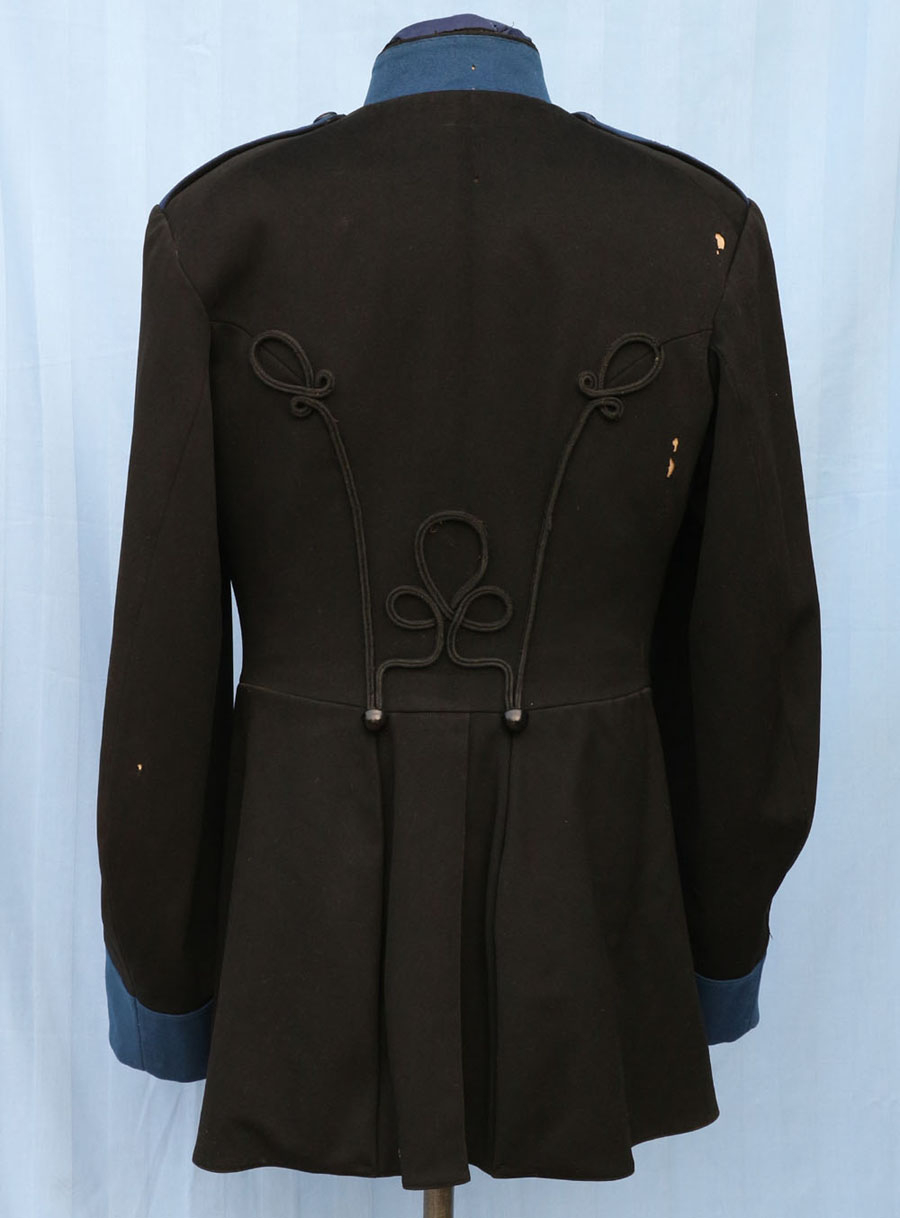 |
| The reverse is equally distinctive with a unique braid pattern and a split rear skirt; a feature the Preußen forces did not introduce until 1895. This Polrock is in excellent condition for being 120+ years old. There are only a few insect or rodent holes to the right shoulder (curses!), a few on the back of the collar, and one on the left sleeve. But overall, externally it is in exceptional condition which is very unusual for any uniform of this age. |
 |
| |
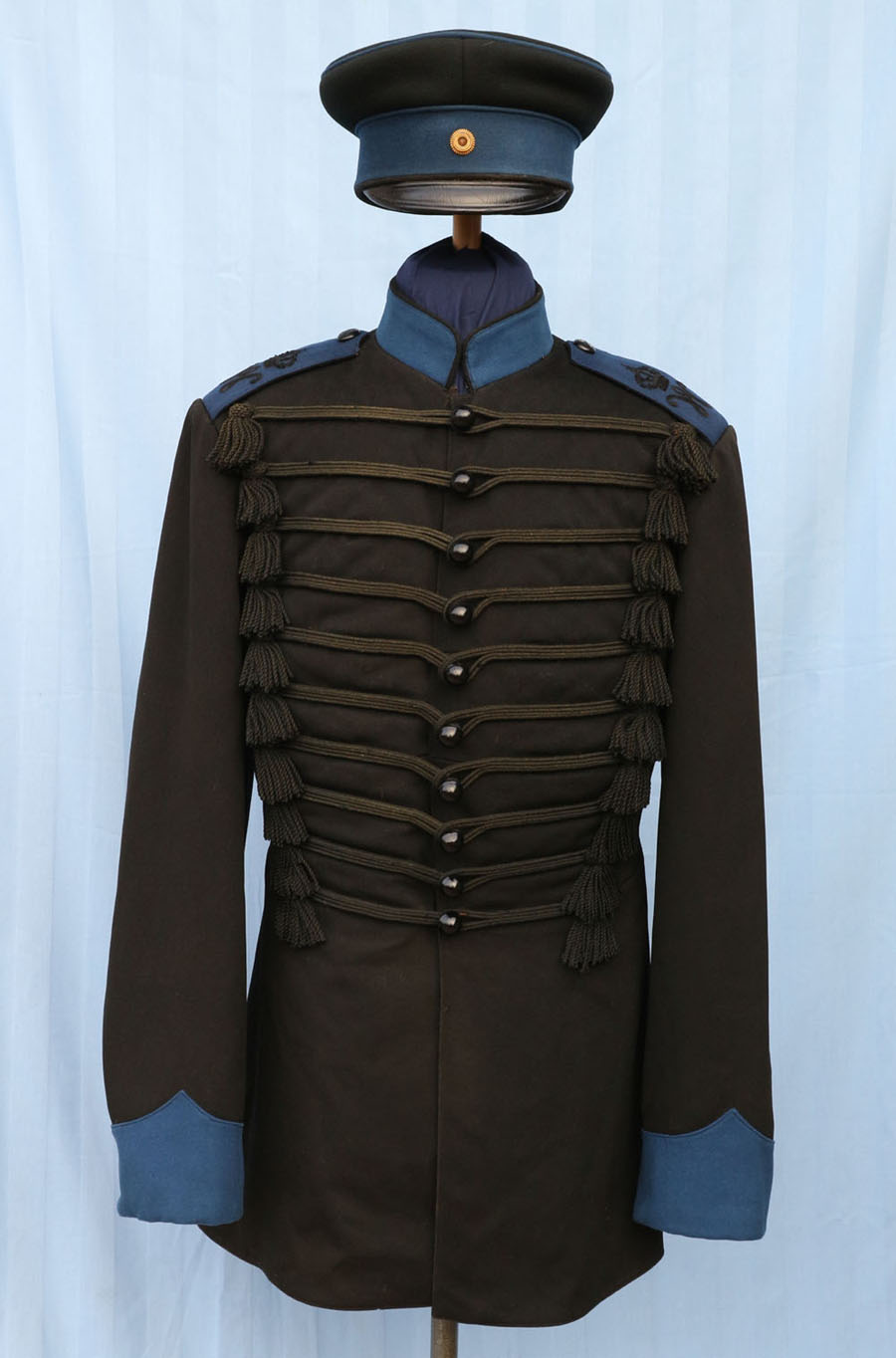 |
| The black Polrock from Braunschweigisches Infanterie-Regt. Nr.92 with an equally rare black NCO Braunschweig Schirmmütze. To see the Schirmmütze click Here. |
| |
|
 |